The road to a circular and climate-positive festival
The sustainable mission of Into The Great Wide Open
Projects
Content

A social and circular society is the future. To achieve this, a sustainable transition is needed. Into The Great Wide Open and Lab Vlieland see festivals as the ideal testing ground for this: a small society, built from scratch, where you can do everything differently.
The urgency is high. That is why we are taking on the challenge with a clear ambition: working towards a fully circular and climate-positive festival. An ambition without an end date, not a promise. Where we can, we measure our steps and results and make them public.
What do circular and the climate ambition mean for ITGWO?
For us, circular means that nothing ends up being incinerated or landfilled. Materials are reused, recycled to a high standard or composted. What we buy is second-hand, refurbished, bio-based or made from recycled material.
On climate, we are cutting our scope 1, 2 and 3 emissions as far as we can. We also contribute to long-term CO₂ sequestration, using our historical emissions since 2009 as a reference. This sequestration largely happens outside our own supply chain and does not cancel out our own emissions.
We are not there yet, and we can’t do it alone. We are working on this together with artists, volunteers, employees, partners, suppliers and festival visitors, in four steps:
Prevent and reduce. Use energy and materials as efficiently as possible.
Switch. Replace fossil energy and materials with fossil-free, circular alternatives wherever possible.
Contribute to CO₂ sequestration. For the emissions we can’t yet prevent, we invest in long-term carbon storage outside our own supply chain.
Account for historical emissions. Each year, we invest in additional carbon storage, using the calculated emissions of a previous festival edition as a reference.
Prevention and switching always carry more weight than CO₂ sequestration. We have been measuring our footprint for years and share our progress openly. Step by step, we keep reducing our impact.
Where we stand now
Energy
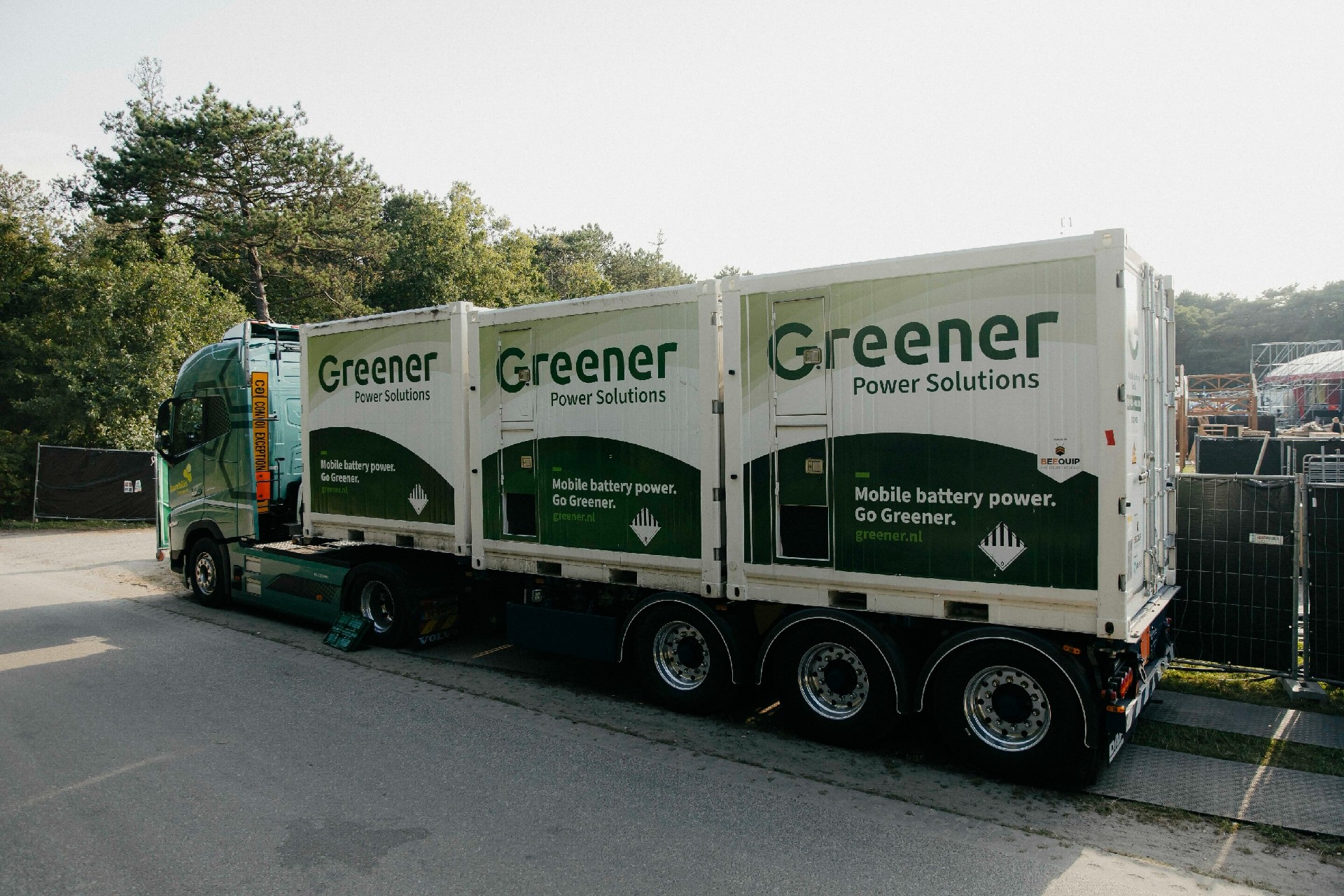
In 2023, our festival locations ran on 85% Vlieland solar power. In 2024, that was 95%. In 2025, for the first time, no fossil fuels were used at all for the energy supply at any festival location. In 2026, we will continue this trend and further expand the system. For example, we are deploying electric vehicles as mobile batteries to make smarter use of locally generated energy.
Construction
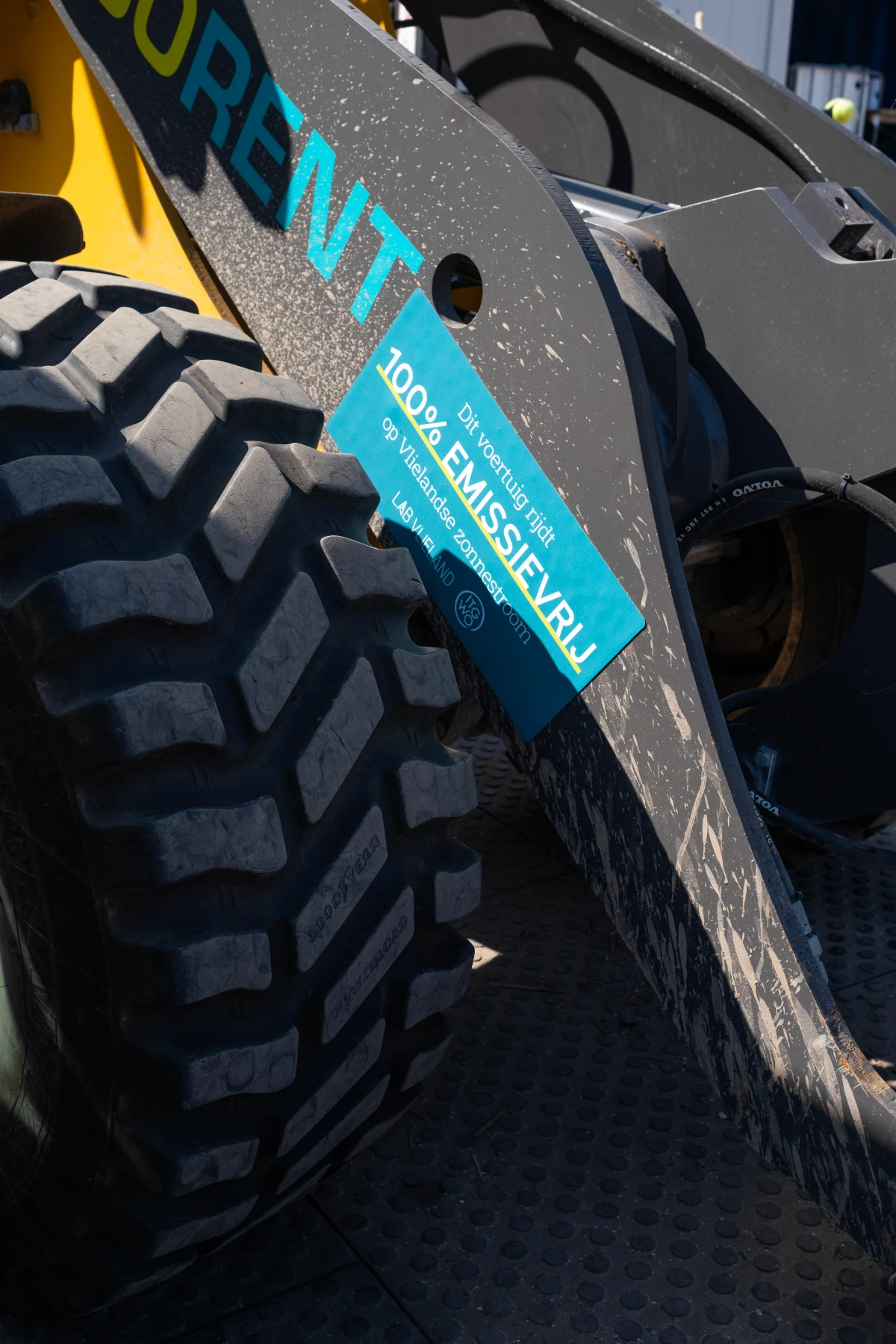
Since 2024, we no longer use equipment that runs directly on fossil fuels during setup and dismantling on Vlieland. Electric forklifts, gators, and vans replaced the fossil-fueled versions. This prevents direct emissions from combustion during construction and reduces noise pollution. The next step is logistics, both on the island and on the mainland.
Travel
Thanks to the Goede Reis initiative, visitor emissions are steadily declining. In 2025, 51% traveled fossil-free to the festival, compared to 31% in 2018. The Goede Reis surcharge therefore remains €15, so that fossil travel remains relatively more expensive than fossil-free alternatives. With the Goede Reisplanner, the FIP campaign, and various fossil-free travel options, we try to make fossil-free travel as easy and attractive as possible.
We have been measuring our footprint for years and therefore know better and better where our impact lies. We are not there yet, but we are seeing progress in various areas.
the transition fund
All the money left over from the Good Travel Surcharge goes into the Transition Fund. With this, we charge ourselves an internal CO2 price of 90 euros per ton, and at the same time free up budget for sustainable innovation projects. Emissions thus become a real cost item on our own budget. That helps.
This is how we did it in 2025:

THE ROAD TO CIRCULARITY
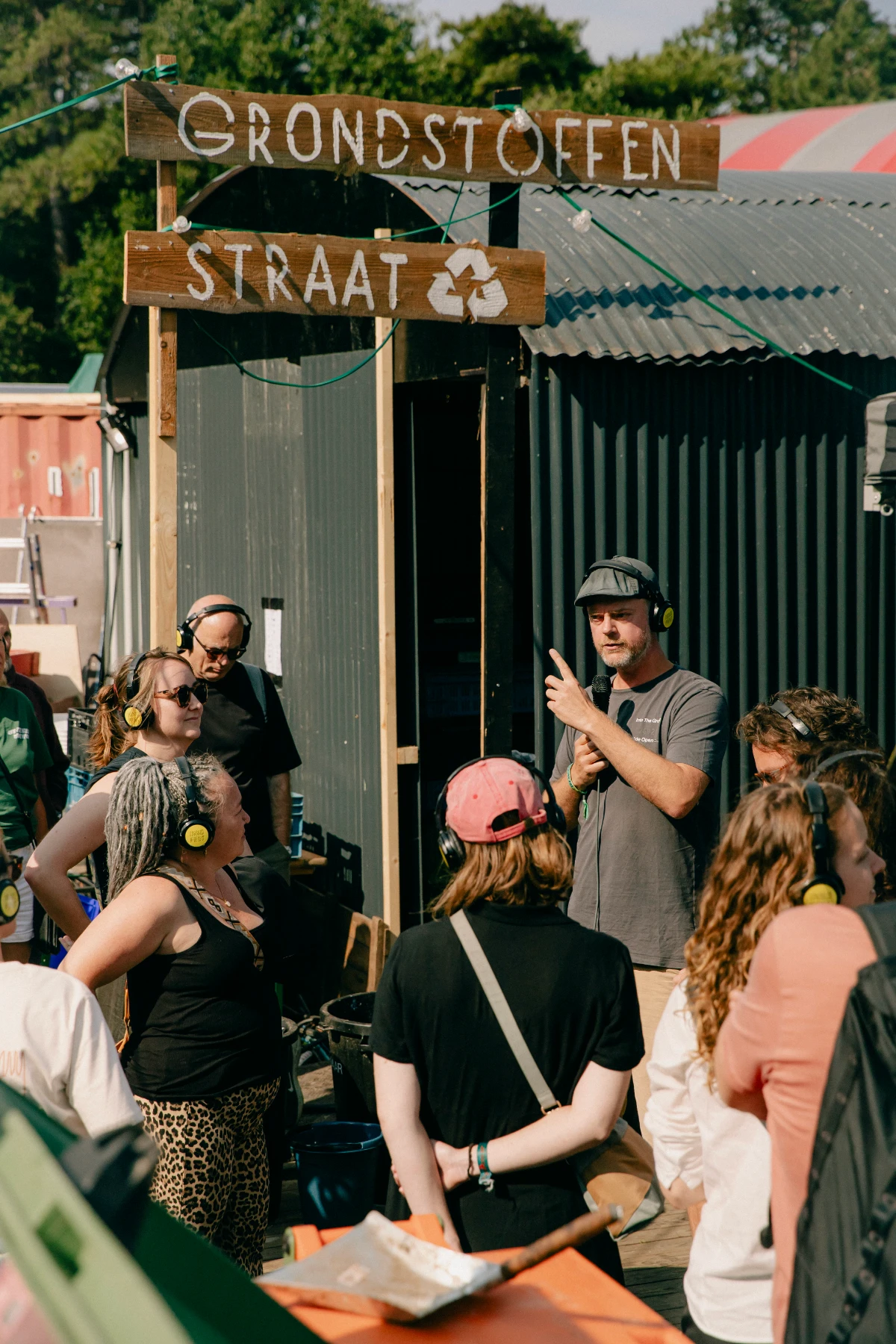
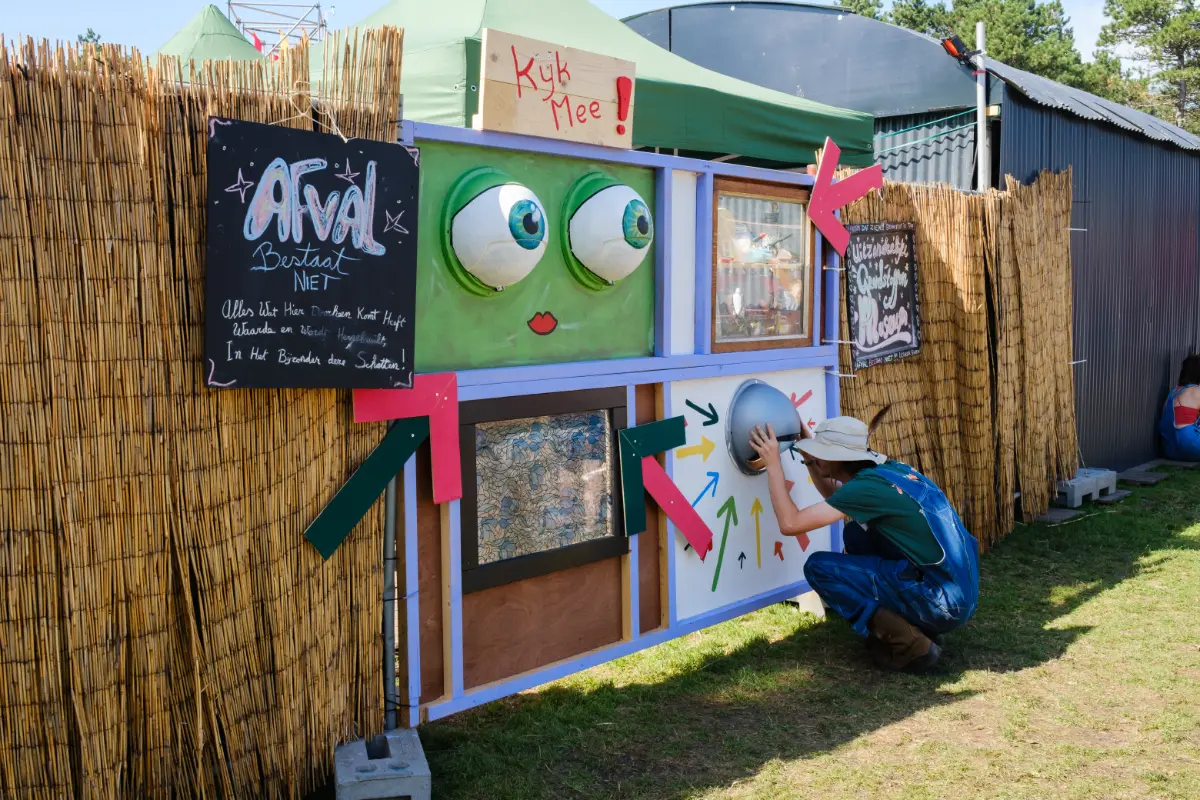
Reusable tableware, collection points instead of waste bins, and a level of resource management that borders on obsessive. The result: just 80 grams of residual waste per visitor per day in 2025, compared with a national average of 450 grams. Our recycling rate was 95%, leaving 5% residual waste (not yet circular). And 90% of our purchasing in 2025 was circular (second-hand, recycled or bio-based).
As for water: we save wherever we can, and our toilets are mainly flushed with purified drainage, groundwater and bar water. Water received extra attention again this year.
Water, we save where possible, toilets are mainly flushed with purified drainage, ground and bar water. This has received extra attention this year.
BOUWPLAATS VAN DE TOEKOMST
Our projects around energy, transport, materials and water come together at the Construction Site of the Future: a temporary testing ground where pioneers from the construction and events sector experiment together and look to scale up the best solutions. Read more about it further on.
With a clear course, a lot of patience and even more trying, we are getting closer and closer to a circular and climate-positive festival. Not by talking about it, but by doing it.