Emission-free energy at all festival locations

A climate-positive festival requires an emissions-free energy system. All power, at all locations. No climate emissions, meaning only Dutch sun and wind. And no local emissions, nitrogen oxides, sulfur oxides, or particulate matter. The latter is especially important on an island that is largely a Natura 2000 area.
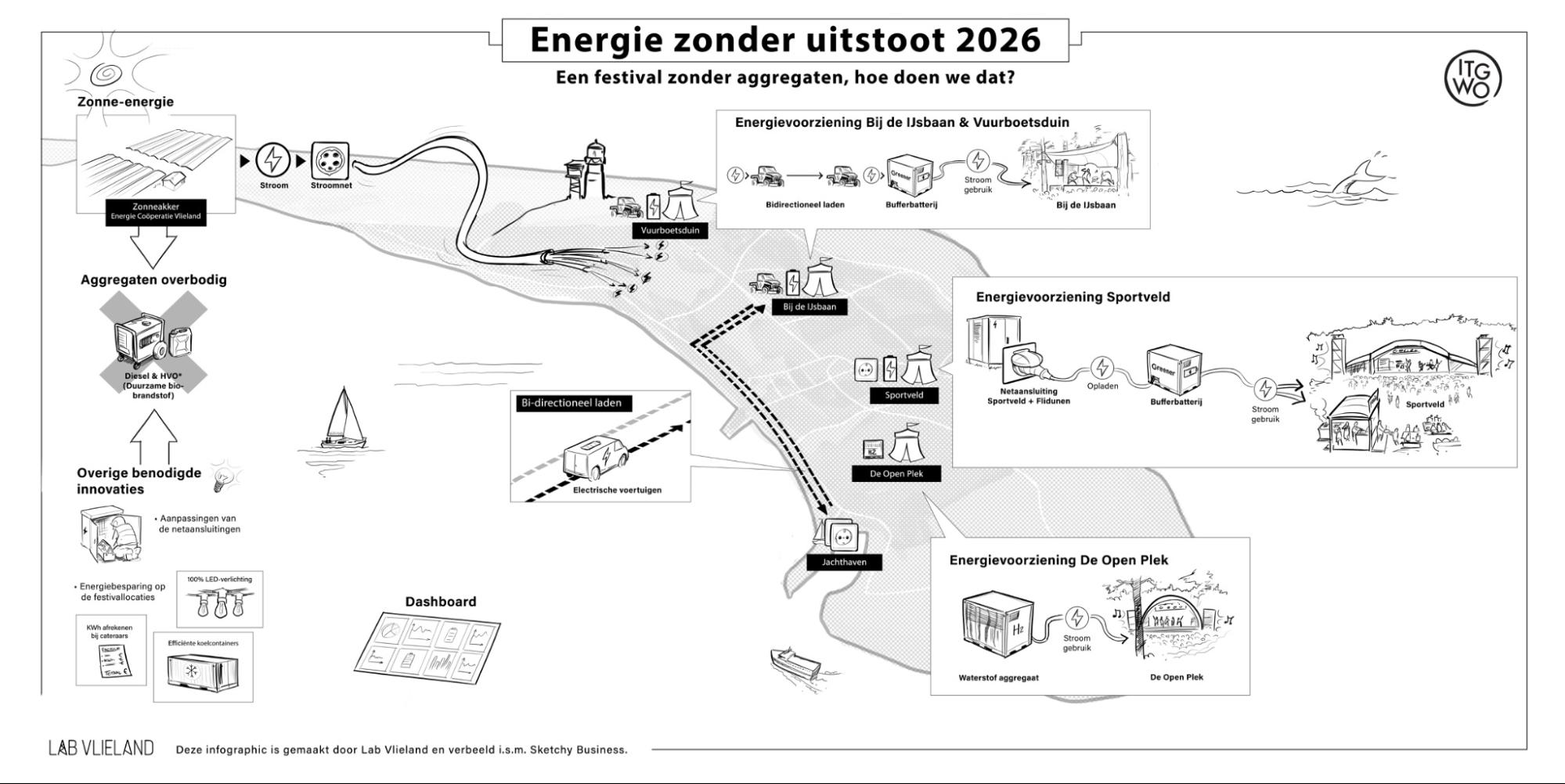
In 2023, we achieved 85% solar power from Vlieland. For the final 15%, generators still had to be used, running on HVO. In 2024, this increased to 95%. And in 2025, we finally hit the mark: 100%.
This year, we are maintaining that standard and expanding the system further. To achieve this, we are doing the following:
POWER SUPPLY PER LOCATION
Each festival location has its own solution, co-financed by the Transition Fund and with partners:
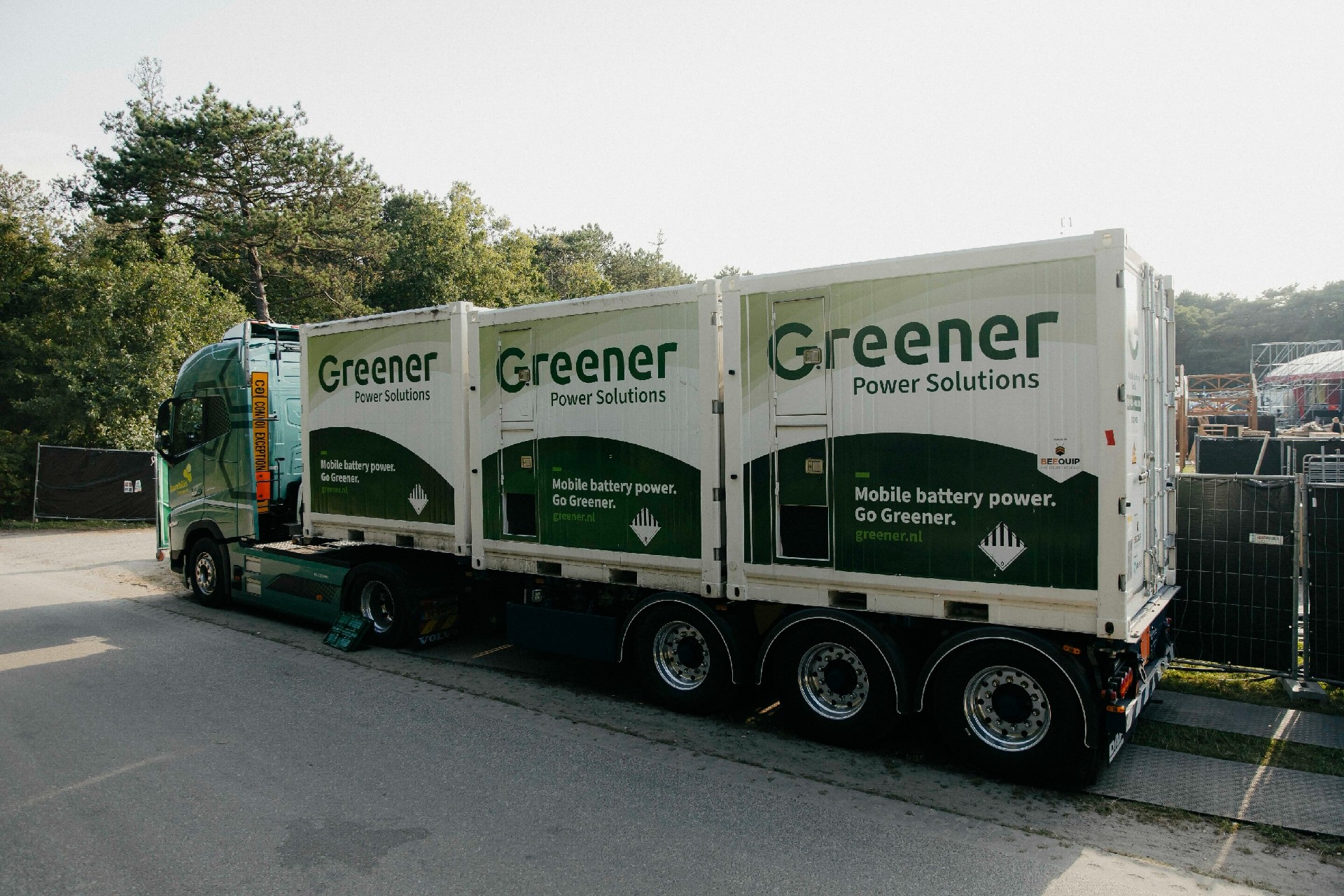
Sportveld: a local grid based on the expanded Flidunen connection, combined with a large mobile Greener battery.
Open Plek: a hydrogen fuel cell with a Watermeln battery, supplemented by a hydrogen fuel cell and battery from KWS, the Sustainable Construction Shed.
Bij de IJsbaan: 400 kWh buffer batteries from Staad, combined with bidirectional charging enabled by NRG and supported by the Klimaattrein.
Vuurboetsduin: a buffer battery combined with bidirectional charging.
Kunstroute: various batteries, also partly utilizing bidirectional charging.
ROLLING BATTERIES - BIDIRECTIONAL CHARGING
New this year: electric vehicles that do not just consume power, but also feed it back. Bidirectional charging turns every vehicle into a battery on wheels, supplying power to the festival during the day and recharging at night.
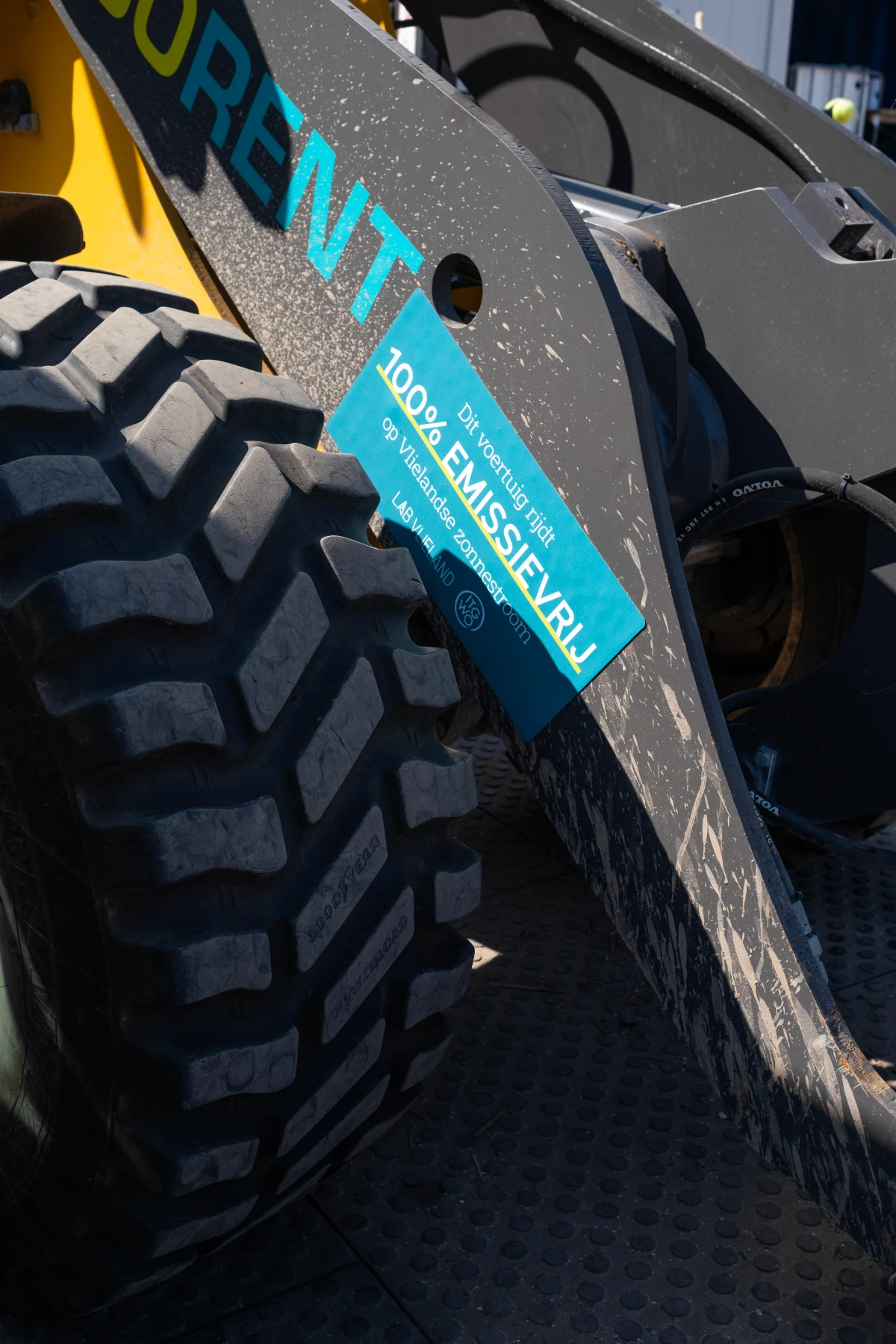
This year, we are running the entire Bij de IJsbaan location on bidirectional power. We are testing this across multiple locations simultaneously, using Renault 4 (Bright) and Renault 5 (Pim lease) passenger cars, a contractor van (TBI) with V2L, a truck with a functional PTO connection via Stroomlijnen, and an electric tractor via BAM.
An energy system composed of dozens of small sources requires completely different management than a generator you simply switch on. Planning, monitoring, and automatically settling all these power flows is done using the Cockpit (dashboard) and the new Grid Builder (smart power planning tool) from NRG.
These projects are part of the Construction Site of the Future, where the festival and construction sectors collaborate to explore what emission-free work looks like in practice and share these insights with other industries. You can find more information about this on the Construction Site of the Future page.