Clean up climate emissions
Cleaning up residual emissions that cannot be prevented yet

ITGWO is on its way to becoming climate positive, but is certainly not there yet. However, since 2023, the festival has been cleaning up all its 'not yet preventable residual emissions' through the use of high-quality and stable natural CO2e storage.
We do this in a fixed order. First, prevent and reduce emissions as much as possible. Then transition to renewable and emission-free energy: Dutch wind and solar, and sustainable biofuel only where there is absolutely no other option.
After that, we calculate how much is left over (see To Measure is to Know). That is our 'currently unavoidable residual emissions': the emissions that we could not prevent this year. Because we cannot prevent these yet, it is important to take responsibility for them—until we do succeed—and to compensate or, in fact, simply clean them up.
THE TRANSITION FUND
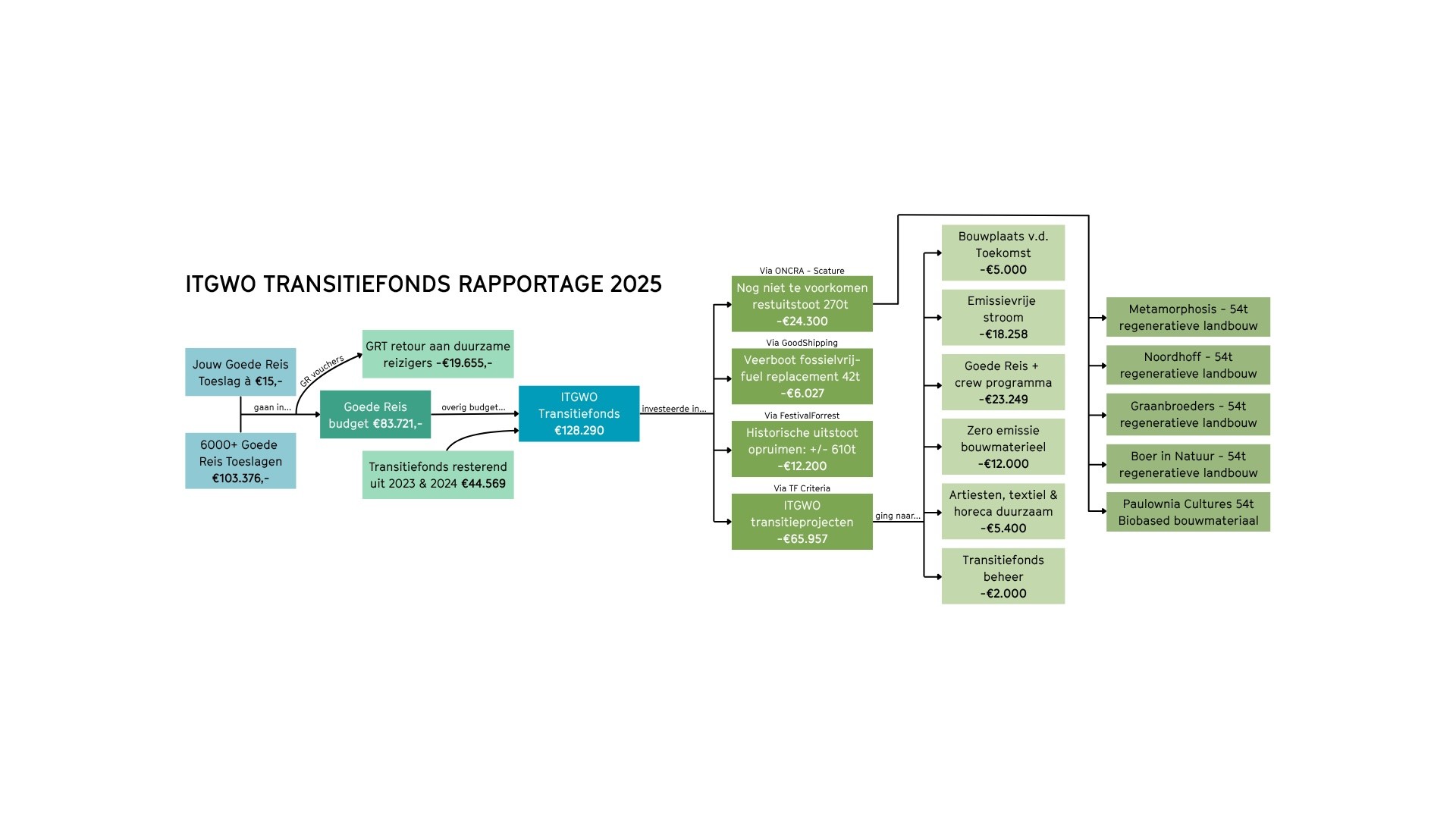
The entire budget of the Good Travel Surcharge goes into the ITGWO Transition Fund. From this, we pay for three things:
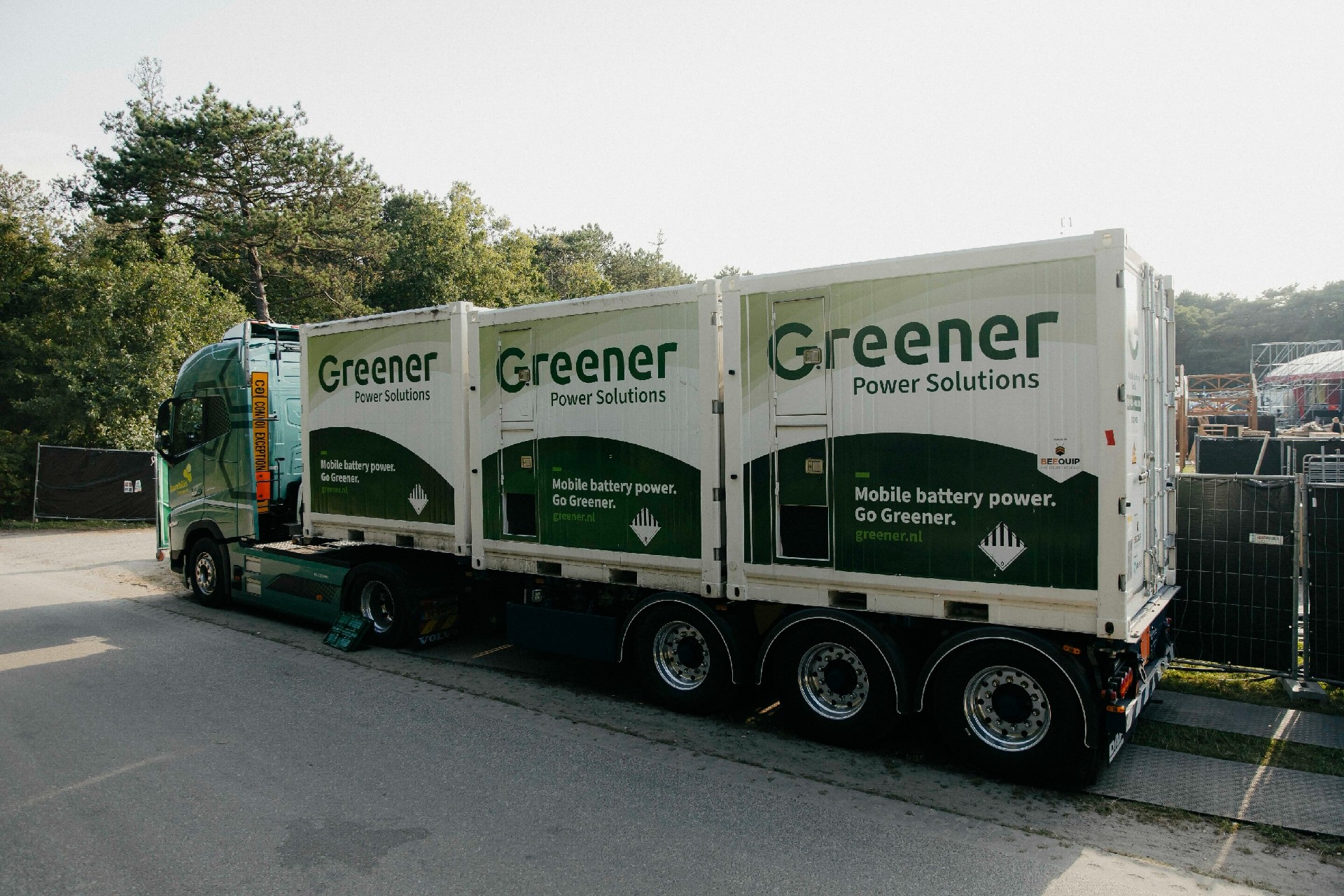
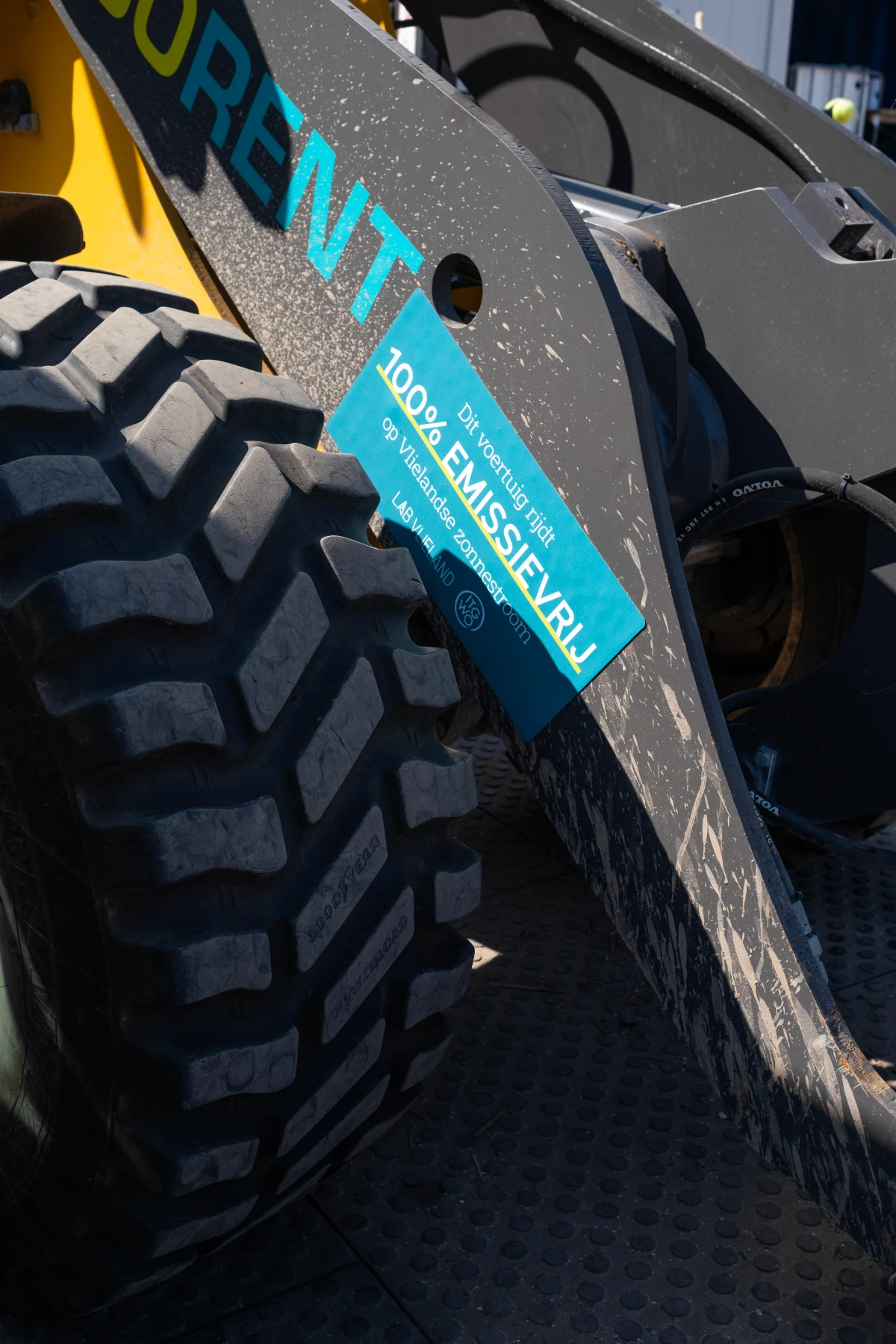
1. Projects that reduce emissions within our own organization and the chain. Think of the Good Travel program, fuel replacement for the ferry, a generator-free festival, emission-free construction equipment, and the Green Artist Travel Allowance. All parts of the organization can request budget: artists, catering, technical production, PR, and Lab Vlieland. For funding, but also for help with brainstorming and execution.
2. Cleaning up the residual emissions that we could not prevent yet.
3. Cleaning up our historical emissions since 2009.
To further accelerate our own transition, we charge an internal CO2 price of 90 euros per ton. This way, emissions are included in the budget, making the use of fossil fuels—diesel, petrol, natural gas—more expensive and the sustainable choice—green electricity and hydrogen—cheaper.
CLEANING UP RESIDUAL EMISSIONS
We do this through ONCRA and Scature, in natural and stable carbon storage projects with regenerative farmers in the North of the Netherlands. It is one of the most efficient ways to sequester carbon over the long term, and at the same time, it boosts regenerative agriculture. Regional, visible, and verifiable.
CLEANING UP HISTORICAL EMISSIONS
For us, climate positive means three things: maximizing efforts to reduce emissions, storing more CO2e net than we emit in scopes 1, 2, and 3, and having cleaned up all emissions since 2009.
So, every year we clean up an old edition. Since the first edition in 2009, we have emitted approximately 6,000 tons. In 2023, we cleaned up edition one (265 tons of CO2e), followed by edition two from 2010 (410 tons of CO2e). In this way, we are working our way through history, year by year.
This year we are doing this together with BAM: we store CO2 in bio-based materials which are then processed in BAM Infra projects. The carbon remains sequestered for the long term, while the construction sector takes a step forward. We will announce which project this involves specifically at a later date.
This is how we did it in 2025: